A reflection on changing values, family structures, and the demographic future of nations
There is a pattern, quiet and consistent, that has unfolded across societies over the past several decades. It does not announce itself with tanks or treaties. It moves through culture, through media, through the slow reshaping of values, and by the time a society notices it, the damage is already generational.
At the heart of this pattern is a simple but profound truth: the family is the foundational unit of any civilization. Empires have understood this. Strategists have understood this. And those who seek control over populations have, perhaps most clearly of all, understood this.
The Heart of Society Has Always Been the Woman
This is not a diminishment; it is the opposite. Women are the biological, emotional, and social architects of the next generation. They are the ones who decide, in large part, whether children are born, how they are raised, what values they carry, and whether the family remains a cohesive unit or dissolves into isolated individuals. This is an enormous power, and enormous power, historically, has always attracted manipulation.
The question is not whether women deserve freedom, education, and opportunity. Of course they do. The question is far more subtle: who defines that freedom, and in whose interest?
Liberation as a Tool
Beginning in the latter half of the 20th century, a particular vision of women’s liberation gained dominance in Western societies and was aggressively exported globally. On the surface, its promises were noble: independence, self-determination, equal participation in public life.
But underneath, a set of values quietly took hold that went far beyond equality. Motherhood was gradually reframed, not as a dignified and vital role, but as a limitation. Marriage was presented as a form of subjugation. The desire for children was labeled a social construct imposed on women by patriarchal systems. Career, consumption, and individual self-fulfillment became the new sacred values.
The result was not the liberation of women. The result was the systematic dismantling of the family.
Birth rates collapsed across the developed world. In country after country, Italy, Spain, Japan, South Korea, Germany, Russia; fertility fell well below the replacement level of 2.1 children per woman. These are not marginal declines. They are civilizational recessions.
The Population Trap
A population that does not reproduce is a population that ages. And an aging population is, in every measurable way, a more dependent, more controllable, and more vulnerable one.
Consider what happens to a country when its population pyramid inverts: fewer workers support more retirees; the state must expand to fill the gap left by the family; dependency on government grows; and a nation that cannot sustain itself demographically must either import labor and culture from outside reshaping its identity or slowly accept irrelevance on the world stage.
This is not conspiracy. This is mathematics. And it has been observed, warned about, and in some cases deliberately engineered.
Population decline was not simply the natural consequence of prosperity. It was accelerated by policy, by media culture, by an education system that systematically devalued family formation, and by an economic model that made raising children financially punishing. Young people were told, in a thousand subtle ways: have experiences, not children. Build your career, not a home. Find yourself before you settle down. And by the time many decided they were ready, biology had moved on without them.
The Developing World Is Not Immune: The Case of North Africa
For decades, demographic decline was considered a Western problem, a consequence of prosperity, secularism, and post-industrial society. The developing world, it was assumed, would remain demographically vibrant, its societies anchored by deep family traditions and cultural continuity.
That assumption is no longer safe.
Nowhere is this more striking or more alarming than in North Africa, where countries that were demographically young and growing just a generation ago are now accelerating toward the same demographic cliff that Europe has been falling from for decades.
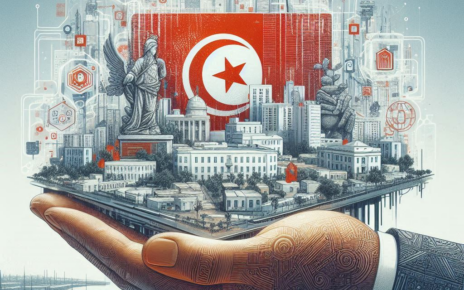
Tunisia is the most dramatic example on the continent. In 1960, the average Tunisian woman had over 7 children. Today, that number has collapsed to approximately 1.7 to 1.8, well below the replacement level of 2.1. According to Tunisia’s own National Institute of Statistics (INS), 2024 saw births fall from 147,000 to just 133,000 in a single year, a drop of nearly 10% in twelve months. Marriages declined by the same rate, with over 7,000 fewer unions registered compared to the previous year. The country’s annual population growth rate has fallen to just 0.87%m the lowest since independence.
The numbers paint a stark picture of what lies ahead. Tunisia’s pension and social security funds, the CNSS and CNRPS are already running unsustainable deficits, projected to reach a combined shortfall of nearly $800 million by the end of 2025. The working-age population that must fund those pensions is shrinking, while the elderly population is growing. The country’s GDP barely grew at 1.4% in 2024, below its pre-COVID levels, with unemployment persisting at over 15% and GDP per capita not expected to recover to its 2019 level until 2034. Meanwhile, an estimated three-quarters of Tunisian youth express a desire to emigrate, and tens of thousands of skilled professionals have already done so. Between 2021 and 2025, approximately 6,000 doctors and 39,000 engineers left the country, hollowing out the very foundations of a modern economy.
Morocco is following a similar trajectory, albeit slightly behind. Moroccan women now average fewer than 2 children, below replacement level for the first time in the country’s recorded history. A decade ago, the fertility rate was 2.5. In urban areas, it has already dropped to 1.77. The elderly population, those over 60, now represents nearly 14% of Moroccan society, up from just 8% twenty years ago, and is growing at a rate five times faster than the overall population. Morocco’s population grew by just 0.85% in 2024. The trend, if uncorrected, leads to the same destination as Tunisia: an inverted age pyramid, a broken pension system, and a state forced to borrow from the future to pay for a present it can no longer afford.
Algeria, with a fertility rate still around 2.7, retains some demographic momentum for now but projections suggest it too will fall below replacement level within a generation, continuing a decline from over 7 children per woman in the 1960s.
What is happening across North Africa is not simply an economic story. It is a cultural one. The same forces that reshaped family formation in Europe, the redefinition of women’s purpose, the glorification of individual independence over family commitment, the economic penalties on raising children have been imported into societies that had their own deep traditions of family, community, and intergenerational obligation. And the damage is compounding fast.
A Global Pattern With Local Faces
Tunisia is not alone in the developing world. South Korea’s fertility rate has reached a catastrophic 0.72, the lowest ever recorded in any country in human history. Japan has been aging and shrinking for two decades. Iran, once one of the fastest-growing populations in the world, has seen its fertility rate collapse below replacement level. Even in parts of sub-Saharan Africa, urban fertility is declining rapidly as Western cultural models spread through social media, entertainment, and international development programs.
The pattern is consistent: the deeper Western cultural frameworks penetrate a society redefining what a successful woman looks like, what a modern family means, what freedom requires, the faster family formation declines. And the faster family formation declines, the more the state must expand to replace what families once provided. More dependency. More debt. More vulnerability.
The Loneliness Economy
What replaced the family? The market.
An atomized individual, unattached, childless, living alone is, from a consumption standpoint, extraordinarily profitable. They buy more, because they share nothing. They are more emotionally vulnerable, and thus more susceptible to the products, platforms, and ideologies that promise to fill the void. They have no community of obligation, no spouse, no children, no extended family and so they turn to the state and the corporation to meet needs that families once fulfilled for free.
Loneliness has become an epidemic across the developed world and it is spreading. A lonely person votes differently, consumes differently, and depends differently. An isolated population is, by every structural measure, an easier population to manage.
The Nations That Understood This
Not all societies accepted this trajectory passively. Some recognized the existential stakes of demographic decline and pushed back, not always perfectly, but deliberately.
Hungary implemented some of the most aggressive pro-family policies in Europe, offering significant financial incentives for marriage and childbearing, and has seen a measurable reversal in birth rate trends. Russia, facing demographic catastrophe after the Soviet collapse, launched national campaigns to restore the cultural dignity of motherhood. Several East Asian governments, watching their populations age at alarming rates, have begun to treat low birth rates as a national security emergency.
What these different governments recognized, regardless of their other political differences, is that a country without a growing, young, cohesive population is a country that cannot defend its sovereignty, sustain its economy, or project its culture into the future. A country is not a market. A country is a people. And when the people disappear, the country disappears with them.
The North African countries facing this crisis have yet to mount a comparable response. Tunisia has no coordinated national pro-family policy. Morocco has spoken of demographic challenges in policy papers but has not translated that recognition into sustained, structural support for family formation. The window to act is narrowing.
The Honest Conversation We Are Afraid to Have
None of this means women should be reduced to a domestic role. That is a false choice, and it is precisely the kind of false choice that has been used to shut down honest reflection on this topic.
A society can honor women’s ambitions and also honor motherhood. A society can provide genuine equality in professional life and also make family formation economically viable and culturally valued. These are not contradictions. They only appear contradictory when the goal is to prevent the conversation from happening.
The real question is: why has it become so difficult, in so many societies, to say that the family matters? Why has “I want to raise children” become something young people feel they need to apologize for? Why is the woman who chooses motherhood over career made to feel that she has failed some progressive standard, while the woman who forgoes children entirely is celebrated as empowered?
These are cultural choices. And culture does not shape itself. It is shaped by media, by academia, by policy, by the slow accumulation of messages that tell people what a good and modern life looks like. In countries like Tunisia and Morocco, those messages increasingly arrive via satellite television, Netflix, TikTok, and internationally funded development programs that carry, embedded within their frameworks, a particular vision of what modernity requires.
What Is at Stake
The future of any nation is, in the most literal sense, its children. Every generation that fails to reproduce itself is borrowing against a future it will not be alive to repay. Every society that loses its family structures loses its social glue, the networks of obligation, care, and transmission of values that no government program can adequately replace.
For a country like Tunisia, already burdened by debt, already hemorrhaging its educated youth to emigration, already watching its pension system buckle under the weight of an aging population, the demographic trajectory is not an abstract future concern. It is an immediate national emergency. A country that grew from fewer than 4 million people at independence to over 12 million today, that educated generations of engineers, doctors, and intellectuals, now faces the prospect of a shrinking, aging, dependent population incapable of sustaining the systems built in better decades.
The great irony of the modern age is that societies which prided themselves on progress and enlightenment are the ones most rapidly aging, most demographically fragile, and most dependent on external populations to sustain themselves. Meanwhile, the cultures that maintained their family structures whatever their other challenges, retain the one thing that no amount of wealth or military power can substitute: a future generation.
To reflect seriously on this is not to be reactionary. It is to ask the most serious question a society can ask of itself: Are we building something that will outlast us?
If the answer is no, then no amount of individual freedom, economic growth, or cultural sophistication will matter. Because there will be no one left to inherit it.
This article is a reflection on demographic, cultural, and sociological trends drawing on data from Tunisia’s National Institute of Statistics (INS), the World Bank, the Stimson Center, and UN Population Prospects. It is intended to provoke thoughtful debate on the future of societies and the policies that shape them.